
TINY BLACK HOUSE | Upstate NY - Adirondacks
Project Description:
Commissioned to design a mass-producible, economical Tiny Home, the project became an opportunity to advance our core philosophy: architecture as a comprehensive relationship between the built environment, landscape, engineering, and art. Inspired by our Amphitheater project on the same 65 acre site, this home was conceived not only as a compact dwelling but as an inclusive environment that prioritizes human experience, flexibility, and engagement with nature—particularly for children with special needs and their families.
Working within a highly constrained footprint, the design focused on essential architectural questions—programmatic efficiency, budget discipline, structural clarity, connection to the landscape, and the strategic introduction of natural light. Constraints became catalysts: the compact scale demanded spatial flexibility and creative solutions to ensure the home offered comfort, functionality, and dignity.
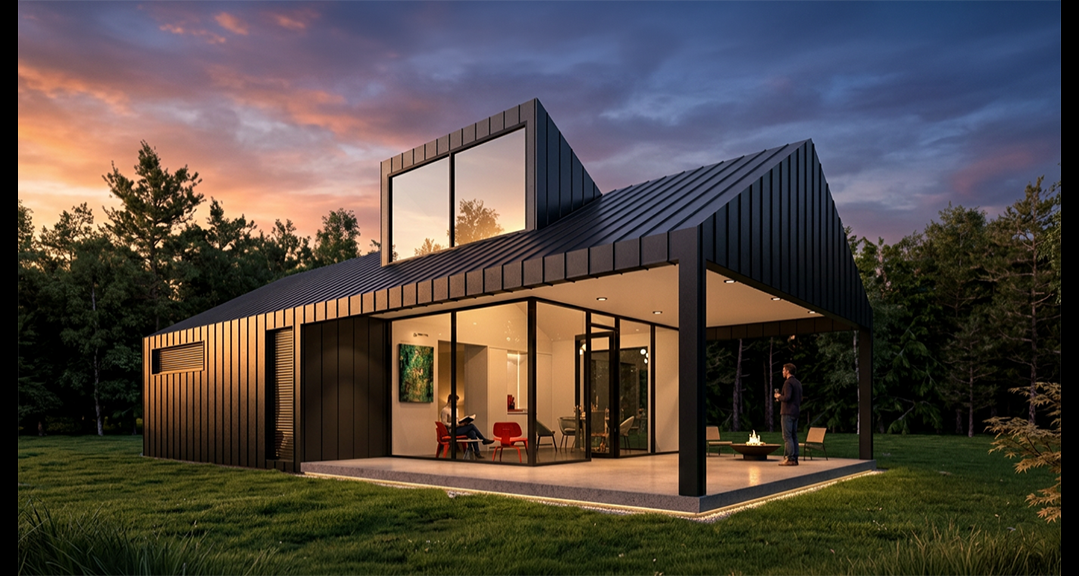
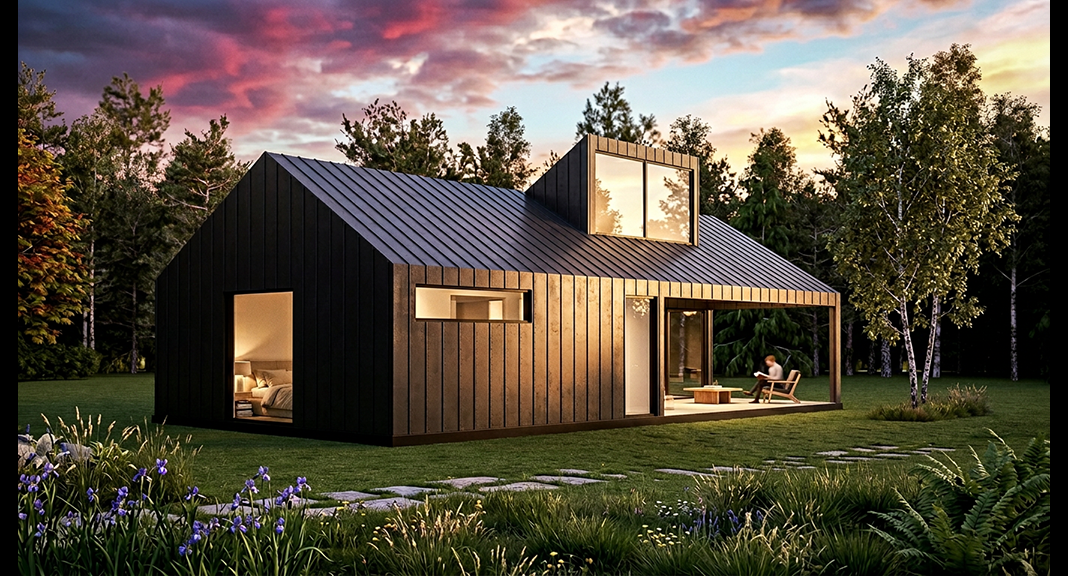
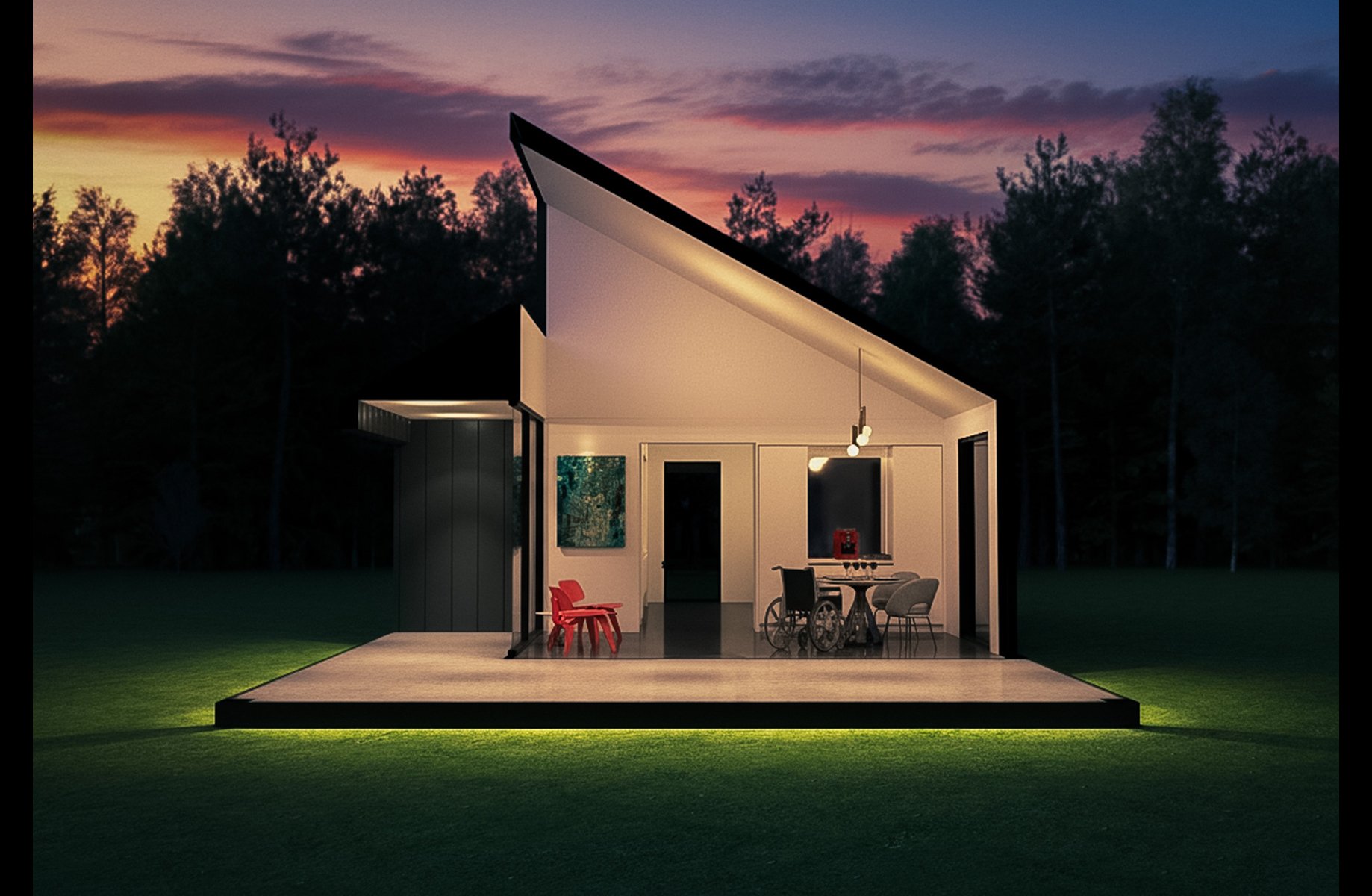
The home is organized into two complementary zones: Public and Private. The Private Zone, containing the bedroom and bathroom, is enclosed in metal, creating calm, protective spaces. Openings are carefully positioned to soften and control daylight, providing a sense of retreat and sensory comfort. The Public Zone, comprising living, kitchen, and seating areas, is defined by a glass enclosure, designed as an expressive, adaptable space that maximizes daylight and visual connection to the landscape. Operable glass walls allow the interior to expand outward, dissolving the boundary between inside and outside when weather permits, enabling daily interaction with nature from the safety and comfort of the home.
Throughout the design, the Tiny Home serves as a dialogue between manufactured form and natural context—a deliberate blurring of boundaries between constructed and organic. Carefully framed views, seamless indoor–outdoor transitions, and spaces scaled for ease of movement foster independence, engagement, and emotional well-being. The architecture supports not only daily living but also moments of pause, connection, and joy, particularly for families navigating the challenges of special needs care.
Materiality reinforces spatial intention: metal defines quiet, private spaces, while glass opens public areas to landscape and light. The home’s flexibility allows residents to modulate spatial experience, expand or contract volumes, and adapt the space to changing needs. This responsiveness embodies the belief that architectural value is not dependent on scale, cost, or complexity.
By shaping a highly constrained, transportable structure through spatial flexibility, material contrast, and critical placement of openings, the project demonstrates that even a simple, economical home can achieve meaningful social, environmental, and experiential impact. It exemplifies how thoughtful design can create architecture that is humane, resilient, and deeply connected to the landscape, offering beauty and functionality in equal measure.